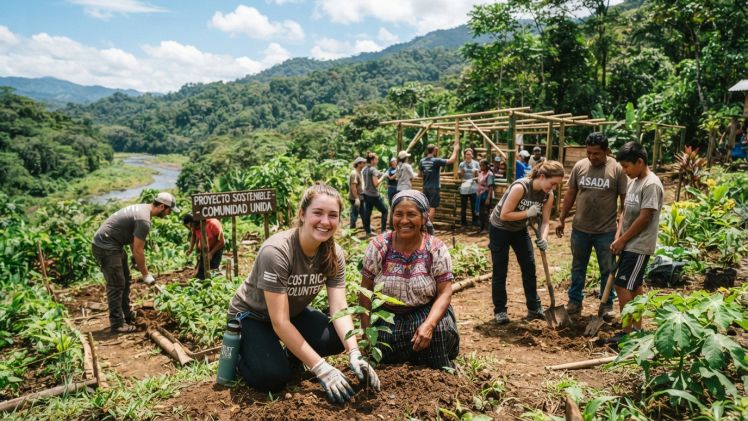
What does sustainable volunteering in Costa Rica actually look like? This FAQ-style guide answers the most common questions about volunteering in Costa Rica, exploring how programs support environmental conservation, uplift local communities, and give volunteers a responsible way to contribute to lasting change.
Why is Costa Rica known for sustainability?
Costa Rica has built a global reputation around environmental protection and social progress. The country abolished its army decades ago, redirecting national priorities toward education, healthcare, and conservation instead. Combined with its rich biodiversity, this mindset has made Costa Rica a natural fit for travelers who want their time abroad to mean something beyond sightseeing.
Despite these achievements, Costa Rica remains a developing nation with real socio-economic challenges. Many communities still lack adequate resources, which is precisely why thoughtful volunteer support continues to matter.
How do volunteer programs support environmental conservation?
Environmental projects form a core part of the volunteer landscape in Costa Rica, and they’re designed to protect some of the country’s most delicate ecosystems.
Sea turtle conservation projects place volunteers alongside biologists and researchers to patrol nesting beaches, tag turtles, and relocate eggs to protected hatcheries, helping safeguard several vulnerable turtle species from poachers and habitat loss. Beach conservation initiatives take a broader approach, combining trail preservation, scientific research, and public education to protect fragile coastal reserves.
For those drawn to agriculture, eco-agriculture projects connect volunteers with local coffee growers practicing sustainable farming methods. Tasks range from planting shade trees to supporting reforestation, offering a hands-on look at how responsible farming can coexist with environmental protection.
What community-focused volunteer work is available?
Beyond environmental work, many programs address pressing social needs. Volunteers supporting underprivileged children help with engagement activities, homework support, and basic hygiene care in community centers and underserved neighborhoods. Teaching English initiatives give adults and children language skills that open doors to better economic opportunities, particularly in a country where tourism drives much of the workforce.
Construction projects allow volunteers to renovate schools, clinics, and community centers, creating a visible, lasting impact on local infrastructure. Healthcare and dental volunteers support medical professionals who often work with limited resources, assisting with patient care, hygiene education, and administrative tasks at assisted-living facilities and rehabilitation centers.
Women’s empowerment programs have also become an important avenue for change, helping women build confidence, financial literacy, and job readiness skills that strengthen entire families and communities.
How can volunteers contribute responsibly?
Responsible volunteering starts with respecting the communities and ecosystems being served. This means showing up prepared to work hard, remaining flexible when plans change, and approaching each task with cultural sensitivity rather than a “fixer” mindset.
Programs structured around consistent weekly schedules, trained field managers, and clear project goals tend to create more meaningful outcomes than short, unstructured visits. Volunteers are encouraged to listen to local staff, follow established protocols (especially around child safety and environmental protection), and recognize that their contribution supports an ongoing community effort rather than a one-time fix.
Choosing programs with a long-standing local presence also matters. Organizations that have operated in Costa Rica for years tend to have stronger relationships with host communities, better oversight of project quality, and a clearer understanding of which initiatives create genuine, lasting value.
What skills or qualities help volunteers succeed?
Most placements don’t require specialized experience, but a few qualities make a significant difference. A positive attitude, willingness to work with limited resources, and comfort with physical or hands-on tasks all help volunteers adapt quickly. For projects involving children, a background check is typically required to ensure community safety.
Minimum age requirements vary by project, and younger volunteers can often participate when accompanied by a parent, guardian, or group leader. Work schedules are generally part-time, allowing volunteers time to also explore the country’s rainforests, beaches, and cloud forests during their stay.
How long should someone volunteer to make a real impact?
While short stays of one week are available, longer placements of two weeks or more tend to allow volunteers to build stronger relationships with local staff, children, or community members. Continuity matters in community-based work, where trust and familiarity often take time to develop. Programs offering options from one week up to a full year give prospective volunteers flexibility to choose a timeline that matches both their availability and the depth of impact they hope to make.
Why does responsible volunteering matter for Costa Rica’s future?
Costa Rica’s environmental and social progress didn’t happen by accident, and sustaining it requires ongoing support. Conservation projects need consistent, hands-on labor to protect endangered species and fragile ecosystems. Community programs rely on dedicated volunteers to fill gaps left by limited public resources. When volunteers approach their work with humility, consistency, and respect for local expertise, their contribution becomes part of a larger, sustainable effort rather than a short-term gesture.
Costa Rica continues to welcome international volunteers who are ready to combine genuine effort with responsible practices. Those considering a placement should look for programs with established local roots, structured oversight, and a track record of meaningful community and environmental outcomes.